
Bulgaria, 2011
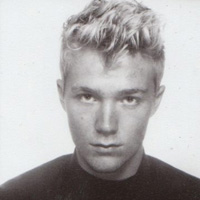
Where do I begin? If you haven’t already heard of Azis, Bulgaria’s uber pop tranny extravaganza, then let me clue you in. Aside from being named one of Bulgaria’s top ten celebrities, he possesses a large body of unreservedly homo-erotic, singularly-styled music videos.

The video for the song Nyama Nakade (“No Way”) is just one other-worldly work in a buffet of heavenly gems dripping from Azis’s perfectly trimmed, blonde beard. The scenario in this song, as in other videos, positively gags the viewer from start to finish. We find a naked man approaching the screen, cutting back and forth to Azis in several unbelievable looks (it’s the only word that fits). The man sits on a chair and spreads his legs, his genitals pixelated, as our heroine writhes longingly with hands. Cut to another scenario where three business men are being filmed by Azis (think crotch shots), as he takes on the reverse role of voyeur. And those hot pink mom glasses? His looks defy all expectations. Did you ever dream that a D&G-looking bustier paired with dangling, plastic star earrings and leather biker gloves would complement neatly cropped, bleach blonde facial hair and raccoon eyes? Or that a crown of metal thorns would eagerly await it’s menage a trois with a boat neck sailor top and oversized, full-length black skirt? That last look is really trying to tread Pierre et Giles territory, but otherwise I’m completely baffled and bedazzled. I just have one thing to say to all the upcoming tranny goddesses, listen and learn.
Tanzania, 2008?
The video for the song “Ni Soo” by Tanzanian heartthrob, Pasha, is brimming with saturated, earth tone sensuality.
But before we delve into the visual aspects of the video, let’s reflect on Swahili, the language of this song and the lingua franca of East Africa. Swahili has always held a mythical, slightly dreamy status in my mind, its name adapted from the Arabic word sawahil, meaning “coastal.” It’s widely spoken in the aforementioned and seemingly restive quarter of Africa, the one you rarely read about because they’re just chilling.
Or so I’d like to imagine. The song, which contains a strong R&B-style vocal, is undeniably catchy; I found myself humming its more-ish chorus all day. The setting of the video, which include the heavy presence of faux rosewood and russet brown furniture against cream-colored walls, delivers a particular kind of global interior aesthetic that is genuinely horrifying. One assumes this ubiquitous selection has been made with the intention to evoke warmth, but instead what I’m left with is the distinct chill of low-level anxiety. And yet, what absolves this uneasy interior from its Dettol-scented doom (Dettol, the world’s leading antiseptic brand) is the presence of our angelic singer, Pasha, whose unfiltered joyfulness is now etched in my brain. His fake Diesel tanktop, oversized Union Jack belt buckle, and unidentified denim are heaven-sent. The comments to this video merely reinforce my POV, that we are in the presence of an East African Eros whose mega-watt smile is powerful enough to end all suffering with one cursory beam.
Iran, 2006?
DJ Negar is a tween trance act from Iran, a trusted source of hyper-melancholic music.
In this first video, we find Negar decked out in a faux Formula-1 Racing outfit, complete with red baseball cap, in a TV studio recording. Her weepy facial expressions and praying/pleading hand gestures amidst a glistening sheen background visual is bewildering and begs me to ask, how did they reach this styling conclusion?
The name of the song is Age Mano Dustam Dari, which translates roughly as “If You Like/Love Me.” If only this was a Facebook-style song title, but it happens to be well known folk song. If you’re familiar with the Iranian penchant for sadness, you’ll know that her gestures are pretty liking/loving. As the song progresses, the studio backdrop reveals an ornamental green-screen shaded door (green-screen green incidentally is the holiest color in Islam). How befitting and post post modern. I immediately notice a split-second pattern: everything is red, white and green. The station logo, the backdrop of red and green walls mixed with Negar’s outfit, creates the colors of the Iranian flag. The rest of the video is pretty much the same. But that’s not important. The fact is this Islamic, girl tween, trance-y, Formula 1 lookbook is an astounding string of tags (Formula 1 clearly winning said tag race).
In Jam-e-Jahani, Negar does a duet with her trusty sidekick, Armin. Both wearing backwards red caps, Negar’s head solemnly hangs over her white, long sleeve tee while cheering sounds flare in the background. A background video of an Iranian flag-heavy soccer match plays and Armin begins to sing a downer, auto-tune vocal, flailing his arm in a gesture of aptly-stoned, heroic defiance. His red, black-striped, polo shirt with matching red arm band makes me question the significance of the color red in Iranian culture. I’m sure it’s major, but haven’t figured it out just yet.
After the awesome downer intro, a boisterous chorus of soccer-match-winning exuberance erupts onscreen. With the arms-up-in-the-air chorus concluded, our beloved tomboy idol of Iran, Negar, starts to sing and bop her head to the predictable beat. More of the same follows, ending the song in a corny clapping outro and heads hanging low, macho drama style.
After watching both videos, one can say that Negar’s nationalistic color scheme conditions her music to be some kind of patriotic trance. On the other hand, and ultra-nationalism aside, her obsession with athletic looks is on point and could easily appeal to tomboys worldwide. Overall, DJ Negar has the potential to be the global trance tween queen. If only that category was transformed into a reality TV show competition…
Afghanistan, 2007?
This incredible song, whose title remains mysterious, by the duo of Feroz & Naznin, allows the viewer to look into a demonized country’s entertainment. Afghani music remains largely unexplored by outsiders, and to a certain extent, is seen as existing in a medieval vacuum of classicist, folkloric genres. This video, and many others, challenge that cliched notion. The use of auto-tune for vocals, which although rampant across the globe, is refreshing in this unusual instance. Afghanistan lies between two ancient giants of musical influence—Iran to the west and India to the south— both influences are clearly audible in this song. The use of programmed, keyboard beats is remarkably fresh to the jaded ear, reflecting the enigmatic blend of Iranian and Indian rhythms.
But let’s not overlook the curtains, the fake plants, the color palette of maroon and sea foam green. The fact that everything is lip-synched, badly, and that the male singer is as stiff as a board—his clapping gesture is so minute, I wonder if it makes a sound! The dancing girls, their formation and serious moves, their long, whipped hair. This video is a treasure trove of gestures, moves, looks and interior design. A window into the real Afghanistan, beyond the constant media flow of burkas and Taliban.
Kazakhstan, 1999?
The video for “Legko,” the only song I could locate by Kazakh boy band Bubliki, is a perfect example of a cheesy late 90s Europop Techno track.
But it’s way more than that. The band is comprised of ethnic Kazakhs and Caucasian guys singing in Russian, the second language of many a former Soviet state. This Eurasian situation makes it way hotter, obviously, and reflects the geographical position of a transcontinental nation that bridges Eastern Europe and Central Asia. The first 10 seconds of the video, which features one of the guys underneath a bi-plane is so hypnotic, it requires repeat views for sci-fi sensations alone. The styling is faithfully mid 90s: goggles, belted khakis, generic “bad haircuts” and dye jobs for guys, sleeveless crop and tank tops for girls (who are already semi-Tank Girl looking), dark lipstick, chunky Rocket Dog-esque boots, tan colors, etc.
The aviation-heavy video, which takes us to an airplane depot setting of sorts, in between shots of whizzing planes, creates a dynamic that further feminizes the boy band (who are already feminized by their “boy band” status) in relation to their video girls. Although some elements are common in videos of this gender based configuration –the boys are topless in some scenes, dancing in a predictably choreographed manner, singing a high-pitched melody (as best they can, which is not very good)– the girls in this video occupy distinctly butch roles by appearing to man and fix old planes. Which is not unusual as far as mechanic fetishes or 90s Girl Power imagery goes, but in this specific context is clearly comical aside from being totally awesome.
Iran (via California), 1997
The 90s band Silhouettt -with three T’s- known as Sepideh in Farsi, consisting of three women, was supposedly the first all-female Iranian band. The name of this song, Korshid Khanom (Lady Sun) from their album, aptly-titled, “Water, Fire & Earth,” conjures up a Witches of Eastwick sensibility, however with Zoroastrian directions instead of New England Satanism. Regardless, it’s pretty amazing how much the movie influenced this particular video. Although the film was made in 1987, it was re-energized momentarily by the release of The Craft in ’95 and other teen goth films. Those shoulder-revealing tops worn by two of the three singers, in dusty mauve and white, really hark back to Cher’s character in the film in her iconic black, shoulder-revealing crop top.
The three women with their purposefully different colored hair is represented here by three, distinct head pieces: green fern, furry white twig and red feather. Although the kaftans and especially the jewelry in the form of hand beads, forehead medallions, face crystals, bangles and the general excess bijoux, reflects the ethnic situation in relation to the Disney-esque head pieces. We find the women against a background of majestic mountain peaks, ancient ruins, and other obvious, pagan landscapes. The choreography is super spell-binding, with it’s hand to face movements, evoking darkness and light. In the middle of the song we encounter a “sexy,” Clarinet solo performed by a young, floppy-mopped Iranian youth prompting the ladies to grin lasciviously (another reminder of cougar-like, witch behavior). Besides that, this song is reminiscent of a lost era of earth mother madness, occult shops, etc.
It is an isolated case of original witch house; witch house ideally referring to middle aged women making dance music about the elements, not the current and rather, mismatched ID.
Bobby Brown had a sweeping effect upon young men in the Middle East during the late ’80s and early ’90s. I remember the boys in Kuwait desperately trying to copy his style to impress the girls, who were all naturally Bobby-obsessed. One Turkish guy went all the way to emulate not merely the style but also the singing of our New Jack god: Ahmet. Wrapped in a black tee; full-length, opened pin-striped shirt (with a white under shirt of equal length); black jeans, and the backward black Kangol hat favored by so many men at the time—including Bobby himself—Ahmet put the finishing touch on his look by frequently pulling a collection of white and black see-through scarves over his head while singing.
Ahmet is, in fact, the Turkish facsimile of ’90s black manhood (minus the “black”, which is pure comedy). He didn’t stop at his look, but took it one step further by magically weaving Turkish classical melodic singing with Bobby Brown’s vocal vision into a strange East-meets-West silk scarf of sound. Actually, the influence can be heard best, and is most unmistakable, around the 4:09 mark of the song.
The title, “Hasret”, means “Longing” in Turkish and it really doesn’t surprise me since 90% of all Middle Eastern music falls under the broad category of love songs. The rest can be filed under “nationalistic anthem” and sadly, only 1% can be check-marked as “other.”
Ahmet’s video takes us into barren mountains: an all too familiar landscape motif for ’90s videos, and I think you know what I’m talking about. This scenario, however, is littered with an array of sweeping silks in orange, black, and red. It also contains seemingly cryptic, talismanic objects and gestures: DIY metaphors of life and death. Ahmet’s silver circular lenses, reflecting the harsh mountain rays, take us back to true ’94 style. It gets a little dance-y in the middle, as the camera swings like a whirling dervish along with Ahmet, reinforcing an already vague semi-Sufi, halfway sacred vibe. Flanked at one moment by a man and woman, each in an open wooden casket of sorts, Ahmet emphasizes his “longing” with unoriginal clarity.
I know Ahmet’s song isn’t great; it’s just a great example of a specific American musical moment in time that was translated into another language and musical tradition (in this case Turkish), by the most competent interpreter available.
Mongolia, 2010 – A brief preface: Mongolian contains many borrowed words from Russian, Farsi, Arabic and Chinese among many languages. It is also sometimes written in Cyrillic, making it exceptionally cool and really hard to pin down.
“Sanaa Tavi” is a song from a super-hot Mongolian rapper by the easygoing name of Gee. Let’s just say he’ll send a few panda aficionados into a quiver (you know who you are). This track has all the machinations of an obvious gangsta rap video: a cage containing an agitated (jailed?) homeboy, gang signs/tattoos, appropriated hood styling via bandana and XXXX-L tees, etc. On closer inspection, however, the beat and the melody are actually sick. Additionally, we are treated to some obscure vocal sample that suddenly reveals itself when the chorus strikes: it’s from Michael Jackson’s 1996 track, “They Don’t Really Care About Us”. Michael’s video is cued in abruptly and is supplemented with Mongolian subtitles! I had totally forgotten how middle-aged-gay-male-vacationing-in-the-Caribbean Michael looked in this phase of his wardrobe. Look at his plunging, Cosmo-colored, Moroccan blouse and amazing Peace sign t-shirt as two effervescent examples.
This is obviously not the first time a rapper has sampled MJ, but this track is unexpectedly rough for our Queen of Pop’s mid-90s summer repertoire. Regardless, a stunning homage, and one that could not be more random and mesmerizing.
This Snooki-like Iraqi singer, Rita Al Turk, is giving signals and outfit changes from Baghdad that cannot be ignored. First off, her song is called “I Don’t Wanna Love You,” which instantly reminded me of the earnestness of country-western song titles.
Also, I did find a song called “I Don’t Want to Love You, (But I Do)”—Ewww!—by “Kelly Willis,” some crap country crooner whose being is vastly inferior to our lady of Rita.
Germany, 1994 – Der Berg Ruft (The Mountain Calls…) by German band K2 is one of those videos that provokes discussion about cultural appropriation vs. cultural homage.
Several factors contribute to the existence of this epileptic video: the rise of Alpine folk dance music bands like Edelweiss (from Austria) who sampled yodeling, dressed up in lederhosen and generally pioneered the fusion of the Middle European ethnic look with club attire. Included in the above is the very conspicuous presence of “Jamaican” references, appropriated by K2 and countless other Eurodance acts in the 90s, molded here haphazardly into the Alpine setting. The blond dreads and lyrics describing a “Rasta from Jamaica…Bob Marley…and the Israelites” in faux patios, can only lead to the assumption that the rapper is addressing other blond rastas. But K2 added several layers of stylistic randomness, my favorite ingredient of all, by installing S&M leather (a very Germanic option) and American denim alongside the Alpine and fake Jamaican situations. Not to mention tossing in a belly dancing outfit to make it more interesting… An arbitrary, albeit slightly deranged, collection of looks colluding on top of an MDMA-laced, multi-culti mountain trip. And who can resist the line, “All I want is dancing wid you baby”? That tiny songstress is a vision of John Waters proportions: a denim, Alpine, S&M, belly dancing icon of the 90s.


Spam-erican Apparel
In the Bedroom with Blood Orange
R.I.P.