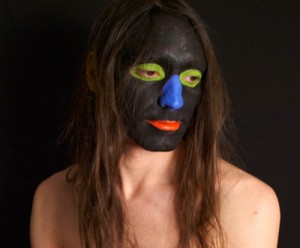
Open now at The Suzanne Geiss Company, DIS Image Studio is the center of production for DIS Images – a serial project focused on manipulating the codes and trends in stock and photography. DIS has invited a select group of artists and photographers to participate in what is to become an assembly line of image-making. The studio will be a platform for a revolving door of collaborators, fostering the production and dissemination of new work… [read more »]
Ask Natasha | Solipsism and (Un)Certainty
First off, let me say:
And: http://sorry.coryarcangel.com/
Q: How are u? — Abdur Rouf
A: It might interest you to know that I am in a recurrent phase, which, perhaps ironically, means I am tired of postmodernism and all of its iterations. I mean recurrent in the way a dream is described; I have returned to a nostalgia for melodrama and teenaged feelings. The glittering value of an icy post-post artform is clear, but its intentions troubling: such conflating has become, to me, cruel. The next step must be clarity, but how does one find that, knowing all that is known? Like Lynn Tillman’s circling notes in American Genius, A Comedy (2006), I am thinking about the dinginess of memory—
“Our family cat, who was the uxorious companion my father wasn’t, regularly followed my mother into the bathroom and watched her apply her red lipstick. The cat once stayed behind after my mother, who had neglected to close the lipstick tube, left it on the sink, and later the cat emerged, her lips and mouth as red as my mother’s, and it was this cat my mother and father abandoned to a shelter, to be killed, and it may have been then my brother abandoned us, I’m not sure, since coincidence plays a role in memory, contorts it or condenses events, mostly in the rememberer’s favor, a memory has the subject’s limits, and we forget much more than we remember, with little to no control over it, though its insistence at having happened determined our fates, that is, how we speak about the past and consequently live in the present, but he did run away around then, I’m pretty sure, for which my father condemned him, since my brother might have saved the business.”
It becomes about self-centeredness, which is unattractive, but the only landing place left. I am aware—too aware—of the impressionistic tone of my own life, and I am morbidly satisfied by this awareness. In manic-depressives, one finds the person most hated in a lifetime and the person of that depressive’s fantasies, all in that same self.
Like Samuel Cramer, the hero of Baudelaire’s La Fanfarlo (1847), I am “simpler than a scholar,” and yet have noticed the burden of the public and taken responsibility for any worthy distraction from that burden. “One of Samuel’s most natural failings was to deem himself the equal of those he could admire; after an impassioned reading of a beautiful book, his unwitting conclusion was: now that is beautiful enough for me to have written! — and, in only the space of a dash, from there to think: therefore, I wrote it.”